Paying for Drawdown
Change vs breakdown

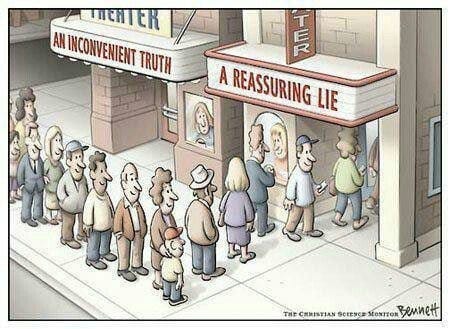
A thought exercise that provides a radically high-speed solution to achieve Drawdown (global decarbonisation, where decarbonisation includes all greenhouse gases, not just CO2) without uprooting and disrupting civilian life, namely the 56% of us who live in cities.
Elaboration on a statement from my last post. Different readers will think of different outcomes when thinking of ‘really radical change’. I outline my thinking on really radical change as of Nov 2021 (note my thinking may shift from this idea in the future based on further research).
Most radical changes to the world of humans for the purposes of reducing CO2 that I can envisage, would not lead to happy outcomes. Creating high-speed change by destroying capitalism or De-growth for example would lead to mass deaths, starvations, migrations and wars. Carried out at a slow pace over centuries, these kinds of system change solutions may be manageable, however not in time to prevent our global climate catastrophe. Let's have a think about people living in cities, Shanghai currently has a population of: 27,796,000 inhabitants! De-growth gives them nowhere to go and no way to feed themselves. London’s population in 2021 sits at a mere 9,425,622 spreading that number of people out around the UK to do subsistence farming results in running out of land. However, even if we had enough land, who from the city wants to move down the countryside? Who wants to give up on their high-tech lifestyle to wash their clothes by hand and scratch in the dirt growing their own food? Because it's de-growth it's not moving to a big house in the countryside with two Range Rovers. It's more like moving into a tiny house and saving buckets of one's own poo to create one's own tree fertiliser (as many permaculturalists do). Oh and that Range Rover you were dreaming about, all you will have is a hand-drawn cart, you will not have enough land for a horse.
Now, no doubt there are some people who would welcome the opportunity to move to the countryside and live a simpler, lower-stress life with a smaller carbon footprint and these people should work towards this dream. It might even save their lives, but it can't be the answer for 56% of the world's population.
56%? According to: weforum 56.2% of the global human population now lives in cities as of November 2020. How can we decarbonise our global society quickly? Where can we get the massive amount of resources necessary to do that without breaking the system (and in so doing destroying the lives of city dwellers). People in the countryside are in less danger from system change as for them it's much easier to scale things down to a local level with local power generation, food production, etc.
All of the above is added here for the sole purpose of scene-setting only.
A Really Radical Solution
So where instead can we get the resources necessary for radical change without destroying the lives of everyone living in cities?
Drawdown: Use the world's military spending to decarbonise humanity.
Have the 5 largest entities on this planet switch all or at least 99% of their military spending over to decarbonisation for 10 years through a legally binding UN treaty. The US, China, India, Russia and the European Union. Whatever other smaller countries do does not really matter to the bigger picture, but better if all nations were on board.
This would allow both urban and rural life to carry on around the world without major disruption and provide an enormous amount of resources to use for drawdown. Countries could have 1 year to move all of their military hardware into storage and prepare to transition the use of defence spending into rapid decarbonisation spending. The UN could create a research institute similar to Project Drawdown to help countries allocate resources to the most suitable regional projects.
'Complicity in genocide is not an employment issue.'
@EmmaReillyTweet is a whistleblower who was sacked by the UN after revealing the leaking of Chinese dissidents' details to the Chinese government.
Watch her full interview with @MaajidNawaz here.
— LBC (@LBC), Sat Nov 13 15:16:57 +0000 2021 source
As I’m writing this I’m reminded of how utterly hopelessly corrupt our system is. I have been following the above story for some time. It needs more attention.
The task would be big, but massive progress with these new resources would be possible to decarbonise: power generation, shipping, air travel, transportation, farming, housing, etc, etc. All the technological solutions to make this possible have already been created. It's more of a time problem as we don’t have time to let market forces gradually transition the world. We need a massive shift, shutting down the world's militaries would be the easiest way to re-allocate the required amount of resources from fighting each other to fighting global warming.
In this way civilian life for the most part is left undisturbed. And government work on everything from managing local councils to spaceflight programmes should continue. Of course this would move the impact from citizens to peoples around the world currently employed in military service. I don’t know what the best solution for these people would be, maybe some could continue working for their governments doing anything from planting trees to scientific research. However, dealing with the fallout of these people should at the very least be easier than the fallout from climate change for the world’s coastal cities. What happens when: Amsterdam, Shanghai, Hong Kong and London flood. Like where will all those people go and what will they eat/do!?
The military
Some military staff of course have to be kept on. People looking after nuclear weapons can’t just walk away and leave them unattended. So some government budget needs to be retained for this and similar purposes. Governments should also be allowed to keep their existing hardware, but in storage and with a skeleton staff to look after it.
The modern military industrial complex would be massively impacted by Drawdown. They would have to transform quickly to offer decarbonising solutions and technologies or go out of business. However, it's largely a positive side effect providing that new employment is created for the people losing their jobs. A world without Lockheed Martin and Raytheon, to name but a few, does not sound so bad from where I’m sitting. It may even help prevent this kind of future:
Much thinking would need to be given to countries trying to cheat, say increasing spending on police and then training them to fly fighter jets etc. Or countries like China with a deeply integrated civilian-military fusion. Do Chinese double hulled fishing fleets that assist their government's military objectives count towards military spending? A lot of issues to consider in this area, however this is a big picture thought exercise so let's not go too far down this rabbit hole here.
Not so radical?
If we look at the idea over the macro scale, humans used to live in small bands that sometimes fought each other, then tribes, chieftains, countries and now empires. So at some point can’t the world stop fighting between empires and create some sort of singleton entity? Would now not be the best time to create such an entity seeing as all humans regardless of differences want to continue living on a stable planet?
We already have similar global legally binding treaties that exist, we have treaties banning the use and development of chemical and biological weapons. We also have treaties on nuclear weapons development and testing. There are treaties in the works to regulate autonomous weapons systems and space weapons testing like that carried out in the past week by Russia which put the International Space Station into lockdown mode in case fragments from the test impacted the station.
A treaty redirecting global military spending to save global civilisation is just an extension of what we already have (importantly, as I pontificate on later, a temporary one).
The cost of Drawdown?
Project Drawdown from their 2016 calculations estimated that it would cost around $29 trillion over 30 years to implement Drawdown by 2050 (about 1 trillion a year). However, they say this would also generate a net positive balance of $74 trillion. Watch their TED talk here and also see their latest cost estimates from Project Drawdown for two scenarios based on revised 2020 research:
The budget of the world's military:
“World military spending rises to almost $2 trillion in 2020”From the: STOCKHOLM INTERNATIONAL PEACE RESEARCH INSTITUTE
So $20 trillion over 10 years, that could make a reasonable dent in emissions and put the world well on its way to achieving Drawdown.
Building Power
How would one go about creating this reality? Basically everyone in the entire world would need to get out on the streets and demand it, but in a non-violent manner, possibly similar to the way Mahatma Gandhi organised for India but spanning the entire globe.
An example to learn from here are the people who blocked roads in the UK in support of Insulate Britain. A local solution that will not save them or anyone else from this unfolding catastrophe.
Dr Ben Buse is a scientist who lectures at Bristol Uni. An Insulate Britain protester, he's now in Pentonville, a Cat B prison known for violence, squalor and high suicide rates.
And he knew he would end up there.
Shouldn't we be asking how it's come to this?
— Deanne DuKhan (@DuKhanD), Wed Nov 17 16:03:47 +0000 2021 source

If people believe this solution could change the world for the better (not just their neighbourhood) then maybe it's powerful? Also similar to Insulate Britain, Drawdown is a simple enough idea to be conveyed in a single tweet in any language. We can compare Drawdown to Elon Musk’s vision for the future:
“We should become a space faring civilisation and a multi-planetary species”
Drawdown: Use the world's military spending to decarbonise humanity.
Having a simple clear vision, that people can share easily, that everyone who reads it will understand without doing research is also powerful.
This idea will to many around the world be highly controversial, even in the face of catastrophe. Many people love their countries' militaries and simply could not imagine a world without them. That’s why this must be proposed as a temporary sacrifice for 10 years and not a permanent fixture. This leaves room to listen and empathise with communities that strongly oppose this action.
Scenario
A scenario would go something like this: We build a movement around this idea, for this article I called it Drawdown because it would fund the implementation of the Project Drawdown vision.
Some groups belonging to Drawdown make some small protests calling for action. The protests by the nature of their requests must be non-violent as we are calling for demilitarisation. The media that first picks up on the story finds that debates around this idea drive audience views as the debate is very lively. We see this with the Insulate Britain campaign, people regardless of viewpoint engage in following it and debating it.
The movement quickly takes hold in many countries around the world and is translated to many languages. Within 6 months protests in support and some violent opposition protests have broken out in countries around the world. The global media loves this as algorithms drive clicks debating this highly controversial movement. People begin to display their views on Drawdown by changing their profile images on platforms all around the world. Parliaments in some smaller EU countries are forced to discuss the issue. The US, India, Russia and China refuse to talk about this in parliament. However, fast-forward 6 months and the idea has toppled some governments in national elections as people around the world start really suffering climate catastrophe consequences. This forces the issue into the mainstream and both the US and Indian parliaments are forced to start talking about Drawdown. Meanwhile in China, Russia and North Korea a plethora of new censorship rains online trying to stop any public discourse on the topic. Eventually there are meetings held at the UN to discuss global funding for climate crises, politicians say that they might be able to cut some military spending and also pull some funds from other things in a drive for climate crisis mitigation but stress it has nothing to do with the Drawdown movement. They point out that they can’t go all in, as adversary’s can’t be trusted, etc, etc. The now worldwide protest movement known as Drawdown feels it has realised a small victory and doubles down on Drawdown resulting in the largest mass protests ever in the history of humanity, and this time even some people in China and North Korea are publicly standing up in support of Drawdown.
What happens next? That’s up to us, to create the future one first must imagine it.
An interesting possible side effect of Drawdown could be that after a successful 10 years of this global policy, it may be that civilian life is enhanced to such an extent with these extra resources that it becomes politically impossible to end the treaty after 10 years and rebuild the world's militaries.
Let's not forget how hard this will be even if we stop fighting each other and put these resources to better use:
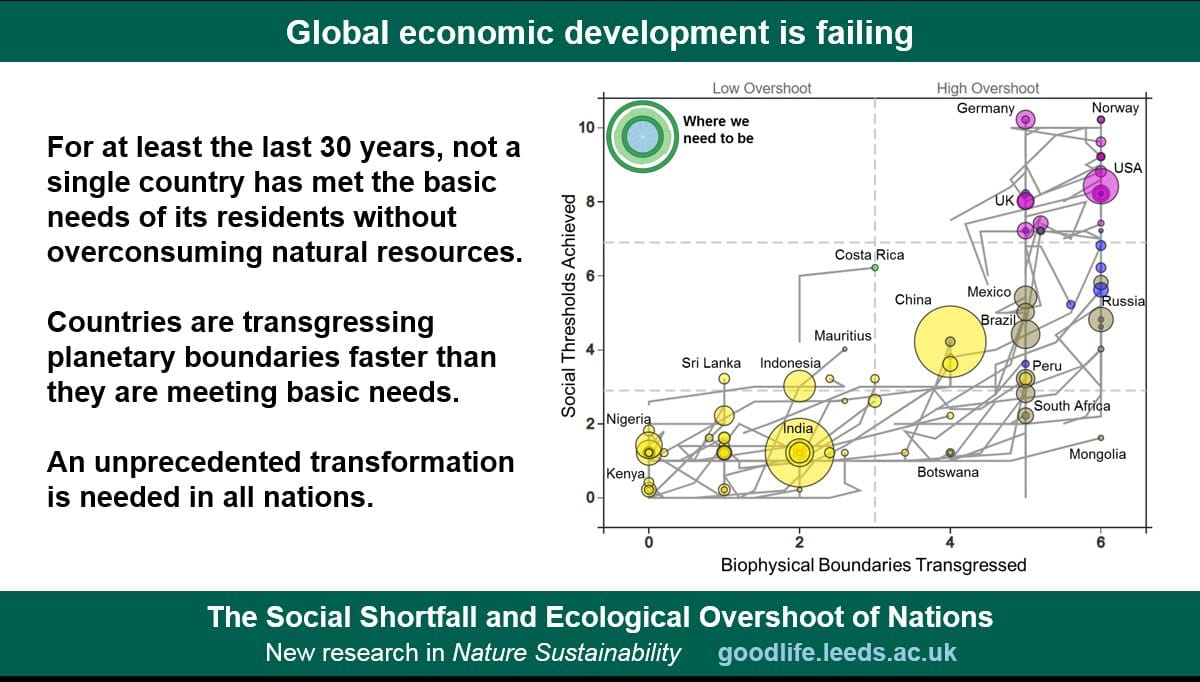
“No country satisfied human basic needs without overshooting”
Very happy to have contributed to this paper in nature sustainability. Still horrified by the results! Over the last 30 years, no country satisfied human basic needs without overshooting #PlanetaryBoundaries!
nature.com/articles/s4189…
& interactive website goodlife.leeds.ac.uk
— Nicolas Roux (@Nicolas43513211), Thu Nov 18 17:30:35 +0000 2021 source
The Drawdown idea I write about here, has of course been thought about before and if you read just one article on this make it this one:
https://www.nature.com/articles/d41586-020-02460-9
Solution
Below are some videos of solutions that one may not have heard of for things people may think cannot be decarbonised. There are many more such examples, this is just the beginning:
Steel without Carbon
Hydrogen aeroplanes
Hemp to diamond
The Drawdown TED talk: